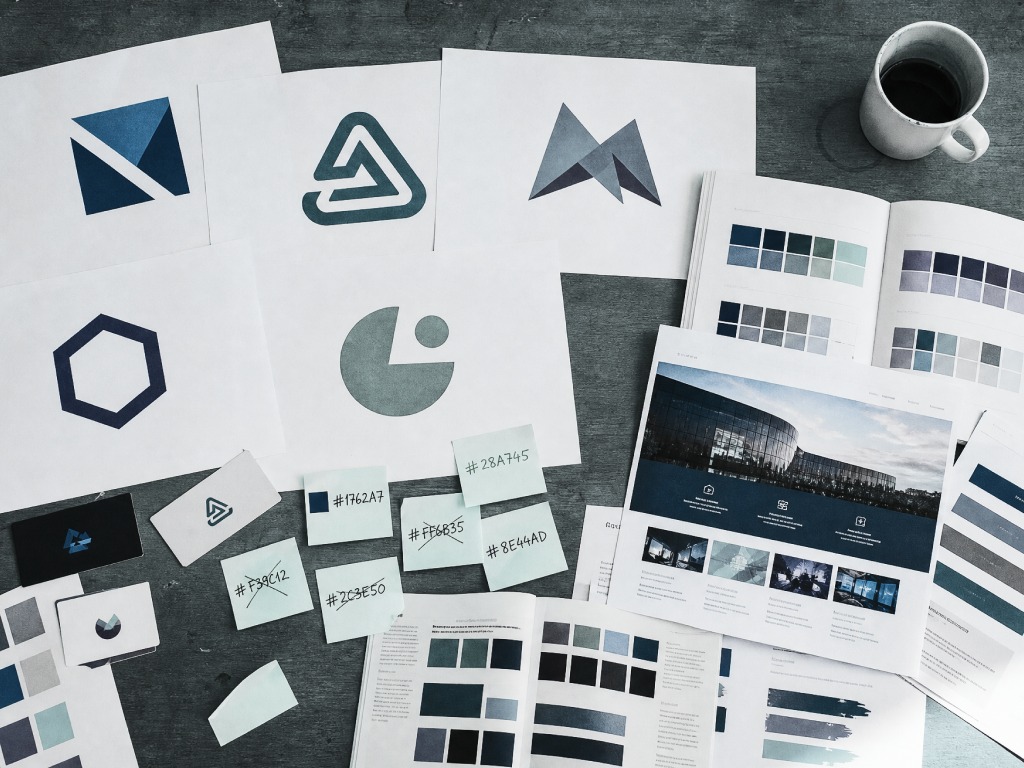
Picture a founder on a Wednesday in late September 2026, having a very good morning. By 11:30 she has four things that used to take weeks: a logo, a landing page, a pitch deck, and a welcome email. Every one of them was generated. Every one of them looks finished.
By 12:30 she has four questions nobody has answered. Who is this actually for? Where do the sign-ups from that landing page go? Who read the code behind the form? Who fixes it when it breaks on a Saturday?
Those four questions are the whole argument of this piece. AI has made the first draft close to free. The decisions behind the draft still cost what they always did, and someone still owns what happens after it ships
Where the tools earn their keep
We work in a studio where web design and development, brand strategy, cybersecurity, offshore staffing, and film production through Rogue Cinematography share one roof, and where a humanitarian research initiative, Build With The Public, runs alongside client work. That mix means we meet AI tools from every side of the work at once. They are good at some specific things.
They are good at getting from a blank page to something you can react to. Copy variations, layout directions, component scaffolding, test cases, a first pass at summarizing a forty-page document: work that used to sit in a queue now arrives the same afternoon. For a founder, that means you can put several directions in front of real customers before committing to one, a luxury that used to belong to bigger budgets.
They are also good at absorbing repetitive work, which frees the senior people on a project to spend their hours on the parts that need judgment. That is the real gain, and it is a gain in speed, not in wisdom.
Where a person still has to lead
Knowing who it’s for. A tool will produce a polished identity for a company whose customer it has never met. The visual work is fast now, which makes it easier than ever to skip the slower work underneath it: talking to the people you are building for and deciding what you will say to them. A beautiful brand aimed at nobody in particular is still aimed at nobody in particular.
Reading what the machine wrote. Neo came up through IT support and endpoint security, including patch compliance work for the Florida Division of Emergency Management. That kind of work builds a reflex: something that runs and something that is safe are different things, and the gap between them is where incidents live. Generated code runs beautifully right up to the day it exposes something. Somebody with that reflex has to read it before it goes live.
Building where mistakes land on people. Zino, who oversees our development work, is a software engineer by training who co-developed an orphan care platform. On a project like that, the question after “does it work” is “what happens to the people in this database if it’s wrong.” A prompt will not carry that responsibility for you, and neither will the tool that answered it.
It is now easy to add a new tool every week. Each one adds a login, a data flow, a bill, and a renewal date, and the choices you make in the first month quietly set what you can change a year later. Deciding what belongs in the stack, and what to build rather than rent, is architecture work, and it stays human work.
What this means at your stage
If you are early, the four questions from the top are cheap to ask this week, before the logo is on a website and the form is collecting real addresses. Write down who it is for, what data it touches, who reviewed it, and who owns it next month. If you cannot fill in a line, that line is your next task.
If you are scaling, look backward. Tools adopted over the last year, often by different people for different reasons, tend to leave gaps nobody chose: a plugin with no owner, a data flow nobody mapped, a generated script running in production with no reviewer. Answer the same four questions retroactively, starting with anything that touches customer data.
Why the answers need to sit in one room
Split across separate vendors, those four questions get answered in separate meetings, if they get answered at all. The brand team knows who it is for. The development team knows it runs. Security, if it shows up, shows up last. We built The Projekt so that strategy, engineering, security, production, and staffing sit at the same table from the first call. That is what “the team behind the team” means for us in practice: the person who asks who it is for and the person who asks who patched it are in the same conversation.
That is also why we are comfortable saying what AI changes and what it leaves alone. It changes how fast you can get to a draft. It leaves alone the questions of who the work is for, whether it is safe, and who answers for it. Those still need someone leading, and the dance goes better when someone is.
Talking about your tech stack.
Bring what you have adopted, what you are considering, and what you are unsure about. We will go through it with you and tell you what to keep, what needs review, and what to build. Start the conversation at wearetheprojekt.com.
About The Projekt
The Projekt is a full-service marketing and creative agency headquartered in Orlando, Florida, building remarkable businesses. Serving as the team behind the team, The Projekt delivers web design and development, brand strategy, marketing, cybersecurity, and offshore staffing solutions across three integrated service verticals. The agency also operates Rogue Cinematography, its in-house production arm, and is actively developing Build With The Public (BWTP), a research initiative focused on identifying the digital infrastructure needs of humanitarian organizations across the United States. For more information, visit wearetheprojekt.com