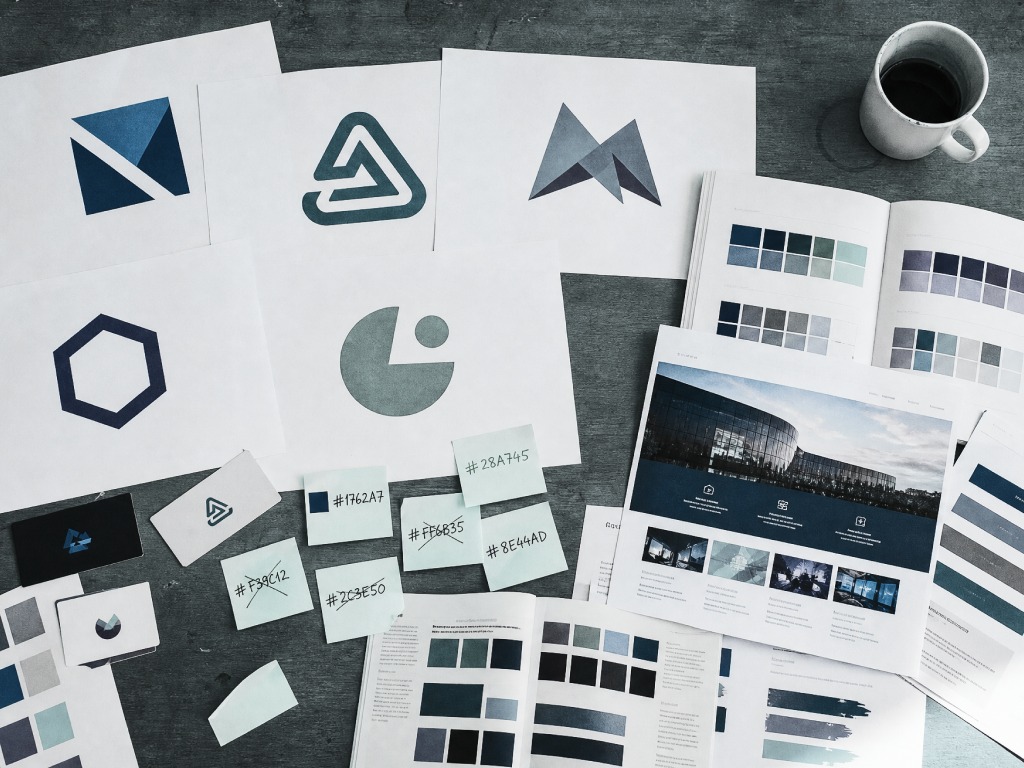
A founder hires a logo designer in January. A freelance web developer in April. A social media manager in July. By the following January, there are four invoices, four different color palettes live across four platforms, and a brand nobody would recognize as belonging to the same company twice.
Piecemeal is a lie we tell ourselves: that spreading a build across specialists saves money. What it actually spends is coherence, and coherence is the thing that was supposed to make the money-saving version worth it.
What “Just a Logo” Actually Costs
Nobody sets out to build a fragmented brand. It happens by accident, one reasonable decision at a time. A logo now, because the pitch deck is due Thursday. A website later, once there’s a product to show. Social media whenever there’s time, handled by whoever on the team is least busy that week.
Each vendor in that chain does their job well. That’s not the problem. The problem is that none of them own the system the others are building into. The web developer doesn’t know what the brand strategist decided about tone. The social media manager doesn’t know why the logo uses the palette it does. Nobody is wrong. Nobody is looking at the whole thing.
The result isn’t a series of small, contained decisions. It’s a slow accumulation of rework: a rebrand at eighteen months that a coherent build would have made unnecessary, a website redesign because the first one never matched what came after it, a scramble to unify a visual identity right when the business needs to be moving fastest.
The Ecosystem Alternative
This is the premise The Projekt is built around, and it’s not abstract. We operate as three integrated verticals under one roof, not three vendors under one invoice.
Creative & Digital handles web design and development, brand systems, marketing content, and the campaigns that keep a business visible once it’s live. Technology & Security pairs cybersecurity solutions with offshore staffing, so growing companies get protected infrastructure and vetted talent without building that function from scratch. Production, through our in-house arm Rogue Cinematography, brings event coverage, film, and visual storytelling to the work that needs to be seen and remembered.
Those three verticals share information the way separate vendors structurally can’t. The team that builds the brand system is in the room when the website gets built. The team securing the infrastructure understands the brand it’s protecting. Nothing gets handed off into a void.
What a Full Build Looks Like in Practice
When a media and creator platform came to us with a functioning product and no coherent identity, the fix wasn’t a logo. It was a positioning and research phase first, understanding who the founders were trying to reach and where the competitive white space actually was, before a single design decision got made. The identity that came out of that process was modular by design: clean enough for an investor deck, expressive enough to hold up in a social-first feed, because it was built to do more than one job from day one.
A custom jewelry brand needed the opposite discipline: restraint. The risk wasn’t invisibility, it was overexplaining a product built around personal meaning. That call, on tone as much as on palette, only holds together because the same team carried it across packaging, web, and social. Split that work across three vendors and the tension between sentiment and simplicity gets resolved three different ways, none of them consistent with the others.
Neither client got a piece. They got a system that scales without starting over each time something new gets added to it.
What This Actually Means for the “Just a Logo” Founder
If the plan is to hire one specialist at a time as budget allows, that’s not a phased strategy. It’s a series of independent bets that happen to share a founder. The Foundation Package exists for exactly this stage: message, design, and structure clarified together, from day one, so the company that shows up at month twelve is recognizable as the one that launched.
This isn’t a generic full-service label standing in for a real answer. It’s a studio with creative, technical, security, staffing, and production capability under one roof, plus an active government contracting practice and a humanitarian research initiative (Build With The Public) that exist because the same operating principle scales past client work. That’s not a claim a single-service vendor gets to make.
We don’t just build products, we architect brand ecosystems. That’s not a tagline attached after the fact. It’s the reason a build done once, together, outlasts a build done four separate times by four separate people who never spoke to each other.
See the Difference Directly
The clearest way to understand the cost of piecemeal isn’t another list of warning signs. It’s seeing the two paths next to each other: what a founder spends, in time and rework, doing it one deliverable at a time, against what a single integrated build actually requires.
Compare the full build vs. the piecemeal path at wearetheprojekt.com, or reach out directly to walk through where your current build stands.